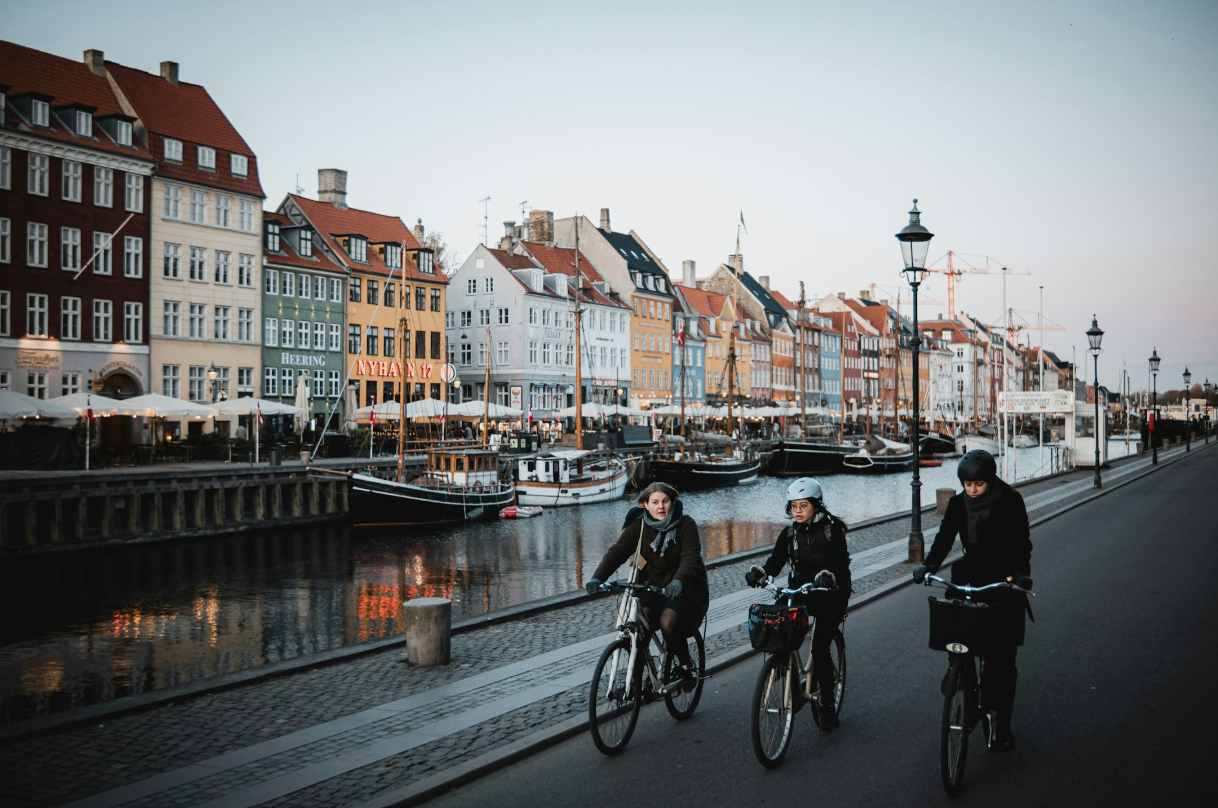
Copenhagen is often introduced through a familiar collection of images: colourful houses along Nyhavn, cyclists crossing the city, elegant palaces and the Little Mermaid sitting quietly beside the harbour. These landmarks are part of the experience, but they only tell a small part of the story.
One of the best things about the Danish capital is that it does not need to be rushed. Copenhagen is compact enough to explore on foot or by bike, yet varied enough to reveal a completely different atmosphere from one neighbourhood to the next.
If you are preparing your trip and want practical information about what to see, where to stay and how to organise your days, Passion Copenhagen is a useful starting point. Once the essentials are planned, leaving some free time in your schedule is one of the easiest ways to enjoy the city properly.
Start with the waterfront, but keep walking
Nyhavn is understandably one of the busiest places in Copenhagen. The colourful façades lining the canal have become one of the city’s most recognisable views, and the area is particularly lively during the warmer months.
It is worth seeing, but there is no reason to stop there.
Continue along the waterfront and Copenhagen gradually becomes quieter. The harbour has played an important role in the transformation of the city, and former industrial areas now sit alongside contemporary architecture, swimming zones and public spaces.
Walking beside the water is also a simple way to connect several parts of central Copenhagen without constantly checking a map.
Cross one of the bridges towards Christianshavn and the atmosphere changes again. Canals, houseboats and narrow streets give this part of the city a distinct identity despite being only a short distance from the historic centre.
Discover the city neighbourhood by neighbourhood
Copenhagen becomes more interesting when it is approached as a collection of neighbourhoods rather than a checklist of individual attractions.
Vesterbro, just behind Copenhagen Central Station, has changed considerably over the years. Today, former industrial spaces sit alongside cafés, restaurants and independent shops. The Meatpacking District is one of the best-known areas, especially later in the day when its restaurants and bars become busier.
To the north, Nørrebro has a more multicultural character. Walking along Nørrebrogade and the surrounding streets reveals another side of Copenhagen, with small restaurants, bakeries, vintage shops and green spaces mixed into a densely populated neighbourhood.
Frederiksberg feels different again. Its broad avenues, residential streets and large gardens create a calmer atmosphere even though the area remains close to the centre.
You do not necessarily need a specific attraction as a reason to explore these districts. Simply choosing one neighbourhood for lunch or an afternoon walk can introduce a welcome change of pace.
Use the bicycle culture as part of the experience
Few European capitals are as closely associated with cycling as Copenhagen.
Bicycles are not merely a tourist activity here. They form part of the everyday transport system, with dedicated infrastructure connecting much of the city.
For visitors who feel comfortable cycling in an urban environment, renting a bike can completely change the way Copenhagen feels. Distances that might seem slightly too long on foot suddenly become easy, while residential neighbourhoods and waterfront areas become much more accessible.
However, Copenhagen’s cycling culture also comes with its own rules and rhythms. Bike lanes can be busy, particularly during commuting hours, so it is important to pay attention to other cyclists and understand basic hand signals before setting off.
Even without renting a bicycle, watching the city move around its extensive cycle network gives an interesting insight into local daily life.
Take time for Copenhagen’s cafés and bakeries
Not every part of a city break needs to involve sightseeing.
Copenhagen has a strong café culture, and stopping for coffee or something from a bakery can easily become part of the day’s programme rather than simply a break between attractions.
Traditional Danish pastries remain an obvious choice, but the city’s bakeries now cover a much wider range of styles. Sourdough bread, cardamom buns and carefully prepared seasonal pastries are widely available across the city.
Rather than searching only for the most famous address, it can be more enjoyable to stop somewhere that fits naturally into your route.
This approach also gives you an excuse to spend more time in neighbourhoods that might otherwise be overlooked.
Look for Copenhagen’s green spaces
Despite its urban character, Copenhagen has plenty of places where it is easy to escape the busiest streets.
The King’s Garden, beside Rosenborg Castle, is one of the most accessible green spaces in the centre. It works well as a short break between visits, particularly on a sunny day.
Frederiksberg Gardens offer much more space and can easily justify a longer walk. Their landscaped paths, lawns and waterways create an atmosphere that feels far removed from the compact streets of central Copenhagen.
Closer to the harbour, parks and waterfront promenades provide another type of outdoor space.
During summer, Copenhagen’s relationship with the water becomes especially visible. Harbour baths and swimming areas attract locals whenever the weather allows, turning parts of the waterfront into informal meeting places.
Save some time for the evening
Copenhagen can feel very different after the main daytime attractions begin to close.
Nyhavn remains lively, but other neighbourhoods often become more interesting in the evening. Vesterbro and Nørrebro both offer a wide range of restaurants and bars, while quieter parts of the centre are pleasant for an after-dinner walk.
The harbour is another good option. Reflections on the water and the combination of historic buildings with modern architecture create a very different atmosphere once the daylight begins to fade.
Rather than planning every evening around a specific attraction, leaving one night free can make room for a restaurant discovered during the day or a neighbourhood you simply want to explore further.
Leave room for Copenhagen to surprise you
It is easy to arrive in Copenhagen with an ambitious list of museums, palaces, viewpoints and neighbourhoods to visit. Many of them deserve a place in the itinerary, but filling every hour is not necessarily the best way to understand the city.
Copenhagen rewards slower travel.
Walk a little further along a canal, cross a bridge without a particular destination, spend longer than expected in a bakery or take a detour through a residential street.
The famous attractions provide the landmarks, but these quieter moments often provide the clearest sense of what Copenhagen is actually like.